


What to Drink to Help Reduce Inflammation Fast

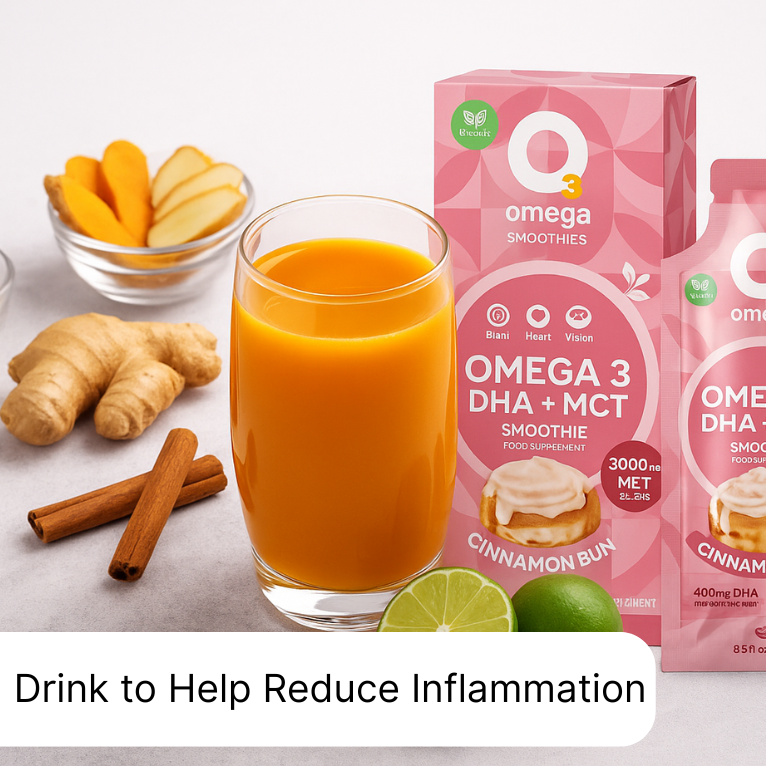
The 7 best drinks to reduce inflammation fast are: tart cherry juice, green tea, turmeric golden milk, ginger tea, pomegranate juice, bone broth, and lemon water. Each works through a different mechanism — from blocking the COX-2 enzyme to suppressing TNF-α cytokines — and most produce measurable effects within 1–4 weeks of daily use. This guide gives you the clinical evidence and exact doses for each, so you can choose the right one for your specific type of inflammation.
Chronic inflammation drives conditions including arthritis, metabolic syndrome, and cardiovascular disease. Research published in Nature Medicine (2023) identifies diet and fluid intake as among the most modifiable factors in systemic inflammation — ahead of stress management alone. These 7 drinks are the most clinically supported options currently available without a prescription.
Quick Comparison: 7 Anti-Inflammatory Drinks at a Glance
| Drink | Key Compound | Daily Dose | Best For | Time to Effect |
|---|---|---|---|---|
| Tart cherry juice | Anthocyanins | 240–480ml | Muscle & joint soreness | 24–48 hours |
| Green tea | EGCG | 2–3 cups | Systemic chronic inflammation | 2–4 weeks |
| Turmeric golden milk | Curcumin | 500–1,000mg curcumin | Joint & gut inflammation | 4–8 weeks |
| Ginger tea | Gingerols / shogaols | 1–2g dried ginger | Acute pain & swelling | 1–3 hours (acute) |
| Pomegranate juice | Punicalagins | 120–240ml | Cardiovascular inflammation | 2–4 weeks |
| Bone broth | Glycine / collagen | 1–2 cups | Gut lining & joint cartilage | 2–6 weeks |
| Lemon water | Vitamin C / flavonoids | ½ lemon in 300ml water | Daily baseline support | 4+ weeks (consistent) |
1. Tart Cherry Juice — Fastest for Muscle and Joint Inflammation
Tart cherry juice is the most clinically documented drink for acute inflammation relief. A study published in the Journal of the International Society of Sports Nutrition (Howatson et al.) found that 480ml of tart cherry juice daily reduced muscle damage markers — including creatine kinase and interleukin-6 — by up to 22% after intense exercise compared to placebo. Its anthocyanins inhibit the COX-2 enzyme, the same pathway targeted by ibuprofen, without the gastrointestinal side effects.
Dose: 240–480ml tart cherry juice daily, or 30ml of concentrate. For post-exercise inflammation, drink one glass immediately after training. For joint pain or morning stiffness, a small glass before bed also improves sleep quality — separately confirmed in a study finding tart cherry increased melatonin levels by 15%.
What it won’t do: Tart cherry works best for exercise-induced and arthritis-related inflammation. It’s less effective for gut or systemic cardiovascular inflammation — choose turmeric or pomegranate for those.
At Holosophy, we use tart cherry in our Omega Smoothie blend alongside other anti-inflammatory ingredients for a compounded recovery effect.
2. Green Tea — The Daily Anti-Inflammatory Foundation
Green tea’s primary anti-inflammatory compound is EGCG (epigallocatechin gallate), a polyphenol that suppresses the NF-κB signalling pathway — the master regulator of the inflammatory response in human cells. Population studies consistently show that drinking 2+ cups of green tea daily is associated with significantly lower C-reactive protein (CRP), the primary blood marker of systemic inflammation. A 2013 meta-analysis of 11 randomised trials found green tea supplementation reduced CRP by an average of 0.58 mg/L — a clinically meaningful reduction for people with elevated baseline inflammation.
Dose: 2–3 cups daily, brewed at 80°C (not boiling — high heat degrades EGCG) for 2–3 minutes. Add lemon juice to increase polyphenol bioavailability by approximately 13x. Avoid adding milk, which binds to catechins and reduces absorption.
Who it’s best for: People with chronic low-grade systemic inflammation, metabolic syndrome markers, or elevated CRP. It’s the best choice for long-term daily use because it’s the most practical and cost-effective of the 7.
3. Turmeric Golden Milk — Best for Joint and Gut Inflammation
Curcumin, the active compound in turmeric, is arguably the most studied natural anti-inflammatory substance in clinical research. A 2012 randomised controlled trial published in Phytotherapy Research (Chandran & Goel) compared curcumin supplementation to diclofenac sodium — a standard NSAID — in patients with active rheumatoid arthritis. Curcumin produced comparable improvements in joint tenderness and swelling scores, with significantly fewer adverse effects. The anti-inflammatory mechanism: curcumin simultaneously blocks TNF-α, IL-6, and COX-2 — three distinct inflammatory pathways.
Dose: The challenge with turmeric is poor bioavailability. Plain turmeric powder in drinks delivers only ~1% curcumin absorption. To make it effective: use 500–1,000mg curcumin extract and always combine with black pepper (piperine increases curcumin absorption by up to 2,000%). A practical golden milk recipe: 1 tsp turmeric, ¼ tsp black pepper, 1 tsp coconut oil (fat further improves absorption), 300ml warm milk or oat milk.
Timing: Take with a meal containing healthy fats for maximum curcumin uptake. This drink takes 4–8 weeks of consistent daily use to reduce chronic joint or gut inflammation markers — it’s not an acute remedy.
4. Ginger Tea — Fastest for Acute Pain and Swelling
Ginger’s gingerols and shogaols inhibit prostaglandin and leukotriene synthesis — the chemical messengers that trigger pain signals and tissue swelling. A 2015 systematic review in Osteoarthritis and Cartilage (Bartels et al.) analysed 5 randomised trials and found that 500mg–2g of ginger daily reduced pain scores by 15–45% compared to placebo in people with knee osteoarthritis, with effects appearing within 1–3 hours of an acute dose.
Dose: For acute relief, steep 1–2 teaspoons of freshly grated ginger (or ½ tsp dried ginger) in 300ml of hot water for 5 minutes. Drink 2 cups daily. For joint pain specifically, 500mg–2g of dried ginger root equivalent per day is the evidence-based range. Adding lemon and raw honey doesn’t reduce efficacy — it improves palatability and adds vitamin C.
Fresh ginger shots — like the Rheal Ginger Zing shots — deliver a concentrated dose (equivalent to ~1g dried ginger) without needing to brew. Useful when time is a constraint.
5. Pomegranate Juice — Best for Cardiovascular and Arterial Inflammation
Pomegranate contains punicalagins — ellagitannins with an ORAC antioxidant score roughly 3x higher than red wine and green tea. Multiple clinical trials show that 120–240ml of pomegranate juice daily significantly reduces oxidised LDL cholesterol and CRP — two primary markers of arterial inflammation. A 2005 clinical trial published in Clinical Nutrition found that patients with carotid stenosis who drank 240ml of pomegranate juice daily for one year reduced their carotid intima-media thickness (IMT) by 35%, while the control group’s IMT increased by 9%.
Dose: 120–240ml of pure pomegranate juice daily (not pomegranate drink — check the label for no added sugar). The polyphenol content varies significantly by brand; fresh-pressed or cold-pressed varieties retain the most punicalagins.
Who it’s best for: People with cardiovascular risk factors, high cholesterol, or metabolic inflammation. Less targeted for musculoskeletal or joint pain than tart cherry or ginger.
6. Bone Broth — For Gut Lining and Systemic Inflammation
Bone broth contains glycine, proline, and hydroxyproline — amino acids that support gut lining integrity and reduce systemic inflammation driven by intestinal permeability (“leaky gut”). Glycine specifically acts as an anti-inflammatory signalling molecule: it inhibits NF-κB activation in macrophages and reduces TNF-α release. A 2017 review in the journal Glycine (Zhong et al.) identified glycine’s role in suppressing systemic inflammatory responses independently of other amino acids.
Dose: 1–2 cups of slow-simmered bone broth daily (minimum 12 hours simmering to extract collagen peptides). Quality matters significantly — commercial powders vary widely. Look for products specifying hydroxyproline content. For people with chronic gut inflammation or autoimmune conditions, bone broth works best as part of a broader gut repair protocol rather than as a standalone intervention.
7. Lemon Water — The Morning Foundation
Lemon water is the least dramatic of the 7 but the most accessible daily habit. Vitamin C is a direct antioxidant that neutralises reactive oxygen species (free radicals) that trigger inflammatory cascades. Large population studies consistently show that higher plasma vitamin C levels correlate with lower CRP. The lemon’s flavonoids — particularly eriocitrin and hesperidin — additionally reduce IL-6 expression in adipose tissue. Vitamin C is also a rate-limiting cofactor for collagen synthesis, directly supporting connective tissue and joint cartilage repair.
Dose: Juice of ½ lemon (approximately 30–50mg vitamin C) in 300ml of warm water first thing in the morning, before breakfast. This is the most effective timing because vitamin C absorption is highest in a fasted state and the alkalising effect helps buffer overnight metabolic acid accumulation.
What to Avoid: Drinks That Worsen Inflammation
Equally important is what not to drink. These beverages actively upregulate inflammatory pathways:
- Alcohol — activates NF-κB, increases gut permeability, elevates TNF-α and IL-6. Even moderate drinking raises CRP measurably.
- Sugary drinks and fruit juice (unless specified above) — high fructose drives hepatic inflammation and raises uric acid, which directly triggers joint inflammation
- Diet sodas — artificial sweeteners including aspartame disrupt gut microbiome balance, indirectly increasing systemic inflammatory markers in multiple human studies
- Energy drinks — high caffeine combined with B vitamins at supplemental doses increases cortisol, which drives chronic low-grade inflammation via the HPA axis
Your Anti-Inflammatory Daily Drink Schedule
You don’t need to drink all 7. The most effective approach is to pick 2–3 that match your specific inflammation type and rotate them through the day:
- On waking (fasted): Lemon water — 300ml with ½ lemon juice
- Mid-morning: Green tea — 2 cups, brewed at 80°C
- Lunch or post-workout: Tart cherry juice (240ml) or ginger tea if acute pain is present
- Afternoon: A second green tea, or pomegranate juice (120ml) if cardiovascular support is a priority
- Evening: Turmeric golden milk (500mg curcumin + black pepper) or bone broth — both support overnight tissue repair
Frequently Asked Questions
What is the single best drink to reduce inflammation quickly?
For fast, acute relief (within 1–3 hours), ginger tea is the most effective option — its gingerols inhibit prostaglandin synthesis comparably to NSAIDs at a dose of 1–2g dried ginger. For post-exercise muscle inflammation within 24–48 hours, tart cherry juice (480ml daily) has the strongest direct clinical evidence. For long-term systemic inflammation reduction, green tea taken daily is the most practical and well-documented choice.
How quickly can an anti-inflammatory drink start working?
It depends on the type of inflammation. Ginger tea can reduce acute pain signals within 1–3 hours. Tart cherry juice reduces post-exercise muscle damage markers within 24–48 hours of dosing. For chronic systemic inflammation measured by CRP, consistent daily intake of green tea or curcumin typically takes 2–4 weeks to show measurable reductions in blood markers.
Does coffee help or worsen inflammation?
Moderate coffee consumption (2–3 cups daily) is associated with lower CRP in large population studies — likely due to its polyphenol content, not caffeine. However, for people with adrenal fatigue, anxiety, or cortisol dysregulation, the caffeine load worsens HPA axis inflammation. If coffee increases your resting heart rate or disrupts sleep, it’s net inflammatory for you specifically, regardless of population-level data.
What should I not drink if I have inflammation?
The clearest evidence is against alcohol (even moderate amounts raise TNF-α and gut permeability), sugary beverages (high fructose directly drives hepatic and joint inflammation via uric acid), and artificially sweetened drinks (disrupt gut microbiome, indirectly raising inflammatory markers). Reducing or eliminating these has a measurable impact on inflammation independent of what anti-inflammatory drinks you add.
Can drinks alone reduce chronic inflammation?
Drinks are one component of an effective anti-inflammatory strategy, not a complete solution. The clinical research supports them as adjuncts to a broader protocol including sleep quality, nervous system regulation, reduced ultra-processed food intake, and appropriate movement. At Holosophy, we combine anti-inflammatory nutrition with nervous system recovery tools for compounded results — the two approaches amplify each other.
Pair anti-inflammatory nutrition with our Holosophy recovery and performance protocol for compounded recovery across multiple systems simultaneously.