

What Is Oxidative Stress and How It Ages You

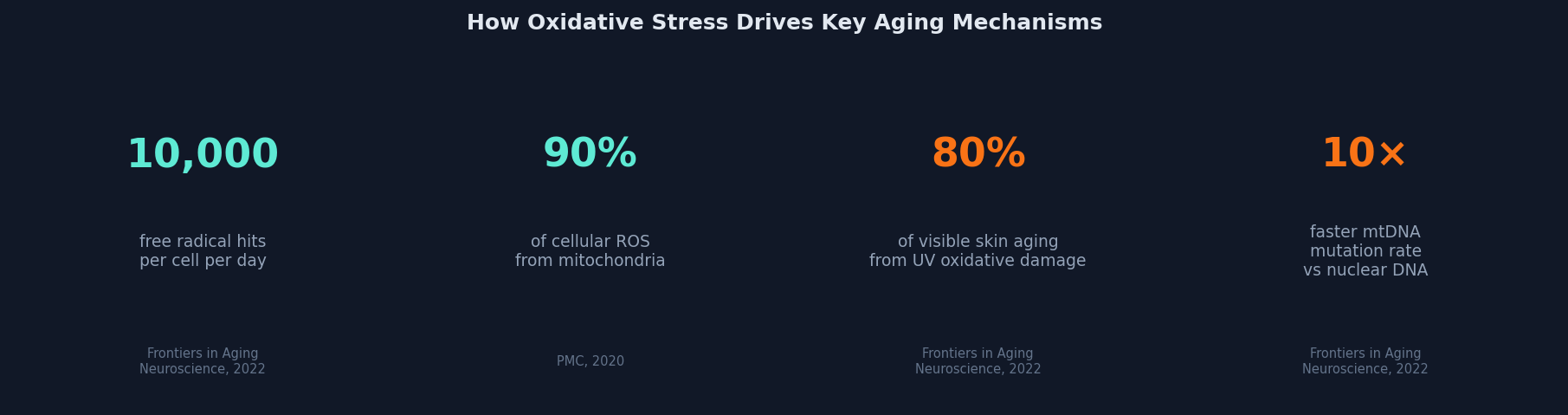
Your cells get hit by free radicals every single day. Each cell takes around 10,000 hits per day — confirmed by Frontiers in Aging Neuroscience (2022). Free radicals are unstable molecules. They damage healthy cells around them. Your body fights back with antioxidants. But when there are too many free radicals, your defences can’t keep up. That’s called oxidative stress. It builds up quietly. Over time it shows up as wrinkles, low energy, and a higher risk of serious disease.
Key Takeaways
- Free radicals cause most cell aging. Your mitochondria (your cells’ energy makers) produce 90% of them (PMC, 2020).
- Up to 80% of visible skin aging comes from UV-triggered free radical damage.
- You can measure this damage — and reduce it. Vitamin C, red light therapy, and hydrogen water all have clinical evidence.
- After 40, your natural defences start to drop. CoQ10 levels in your heart can halve between your 20s and 80s.
What Is Oxidative Stress? (The Simple Explanation)
Your cells make energy all day long. That process creates waste molecules called free radicals. Your mitochondria — your cells’ energy makers — produce about 90% of all free radicals in your body (PMC, 2020).
What are free radicals? They’re unstable molecules. They’re missing one electron. So they steal one from the nearest healthy molecule. That molecule becomes unstable too. Then it steals from the next one. It’s a chain reaction.
Your body has a defence system for this. It uses antioxidant enzymes — SOD, catalase, and glutathione — to stop the chain. You also get antioxidants from food.
Oxidative stress is what happens when the chain reaction wins. Too many free radicals. Not enough antioxidants. The result is slow, quiet damage to your cells, your DNA, and your energy systems.
A small amount of free radicals is normal. They help your immune system and cell signalling. The problem is when they run out of control — for months or years.
How Does Oxidative Stress Age Your Skin?
UV rays cause up to 80% of visible skin aging (Frontiers in Aging Neuroscience, 2022). That’s not from getting older. It’s from chemistry.
Here’s how it works. UV hits your skin cells. This triggers a burst of free radicals. Free radicals attack collagen — the protein that keeps skin firm. They break it apart. They also switch on enzymes that break down elastin. The result: sagging skin, lines, and loss of firmness.
The damage goes deeper too. Free radicals reach the cell nucleus. They damage your DNA repair pathways. Over years, this causes pigmentation, uneven texture, and a weaker skin barrier.
Most skincare targets the symptoms. But the real fix starts inside the cell — at the chemical level where the damage begins.
Something worth knowing: If 80% of visible skin aging is caused by a chemistry problem inside your cells, then creams and serums alone won’t solve it. The real fix combines antioxidant nutrition, light exposure, and targeted supplements. That’s working at the level where the damage actually starts.
What Does Oxidative Stress Do to Your Cells and DNA?
Each cell takes about 10,000 free radical hits per day. Your mitochondrial DNA (the DNA inside your energy makers) is especially vulnerable. It mutates 10 times faster than the DNA in your cell’s nucleus under oxidative stress (Frontiers in Aging Neuroscience, 2022).
Why does that matter? Mitochondrial DNA controls your energy production. Damage there gets worse fast.
Here’s something most people don’t know. Oxidative stress also breaks your DNA repair system. A 2025 study found it cuts the activity of a key repair enzyme (POLG) to just 50% of normal within one hour of oxidative exposure (Signal Transduction and Targeted Therapy, 2025). Your repair system fails right when you need it most.
The result is a vicious cycle. Damaged mitochondria make more free radicals. More free radicals damage more mitochondria. Over decades, this shows up as fatigue, brain fog, and slow metabolism.
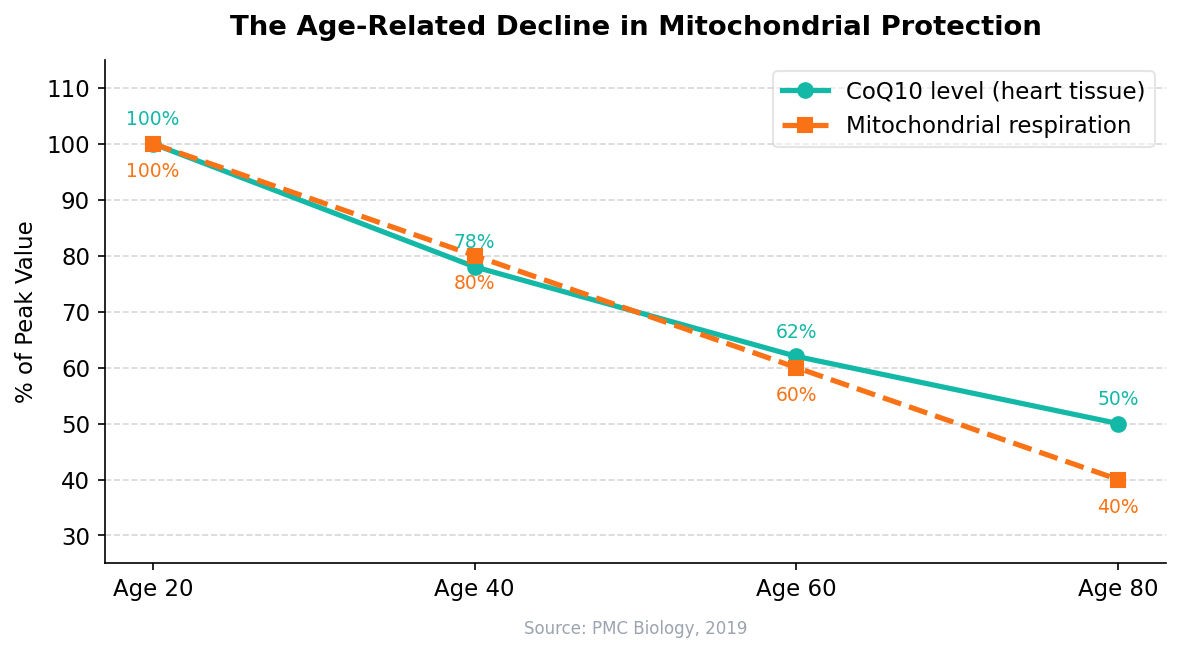
CoQ10 tells this story clearly. Levels in your heart tissue drop about 50% between age 20 and 80 (PMC Biology, 2019). CoQ10 does two jobs. It powers energy production and protects mitochondria from free radicals. When it drops, you lose both.
How Is Oxidative Stress Linked to Chronic Disease?
This isn’t just a skin or energy issue. Brain diseases linked to oxidative stress affect about 1 billion people worldwide (PMC, 2025). We’re talking about Alzheimer’s, Parkinson’s, and ALS.
In Alzheimer’s, the cell cleanup process (called mitophagy) drops by 30–50%. Damaged mitochondria don’t get cleared out. They stay put and keep making free radicals. The brain’s neurons take the hit (Signal Transduction and Targeted Therapy, 2025).
You don’t need a diagnosis to feel the effects. The same damage happens on a spectrum. Years of uncontrolled oxidative stress lead to fatigue, slow thinking, and poor energy — long before any disease develops.
How Can You Reduce Oxidative Stress? Four Proven Approaches
Oxidative stress responds to the right interventions. The key is specificity. Here are four approaches with real clinical data.
Liposomal Vitamin C and Antioxidant Supplements
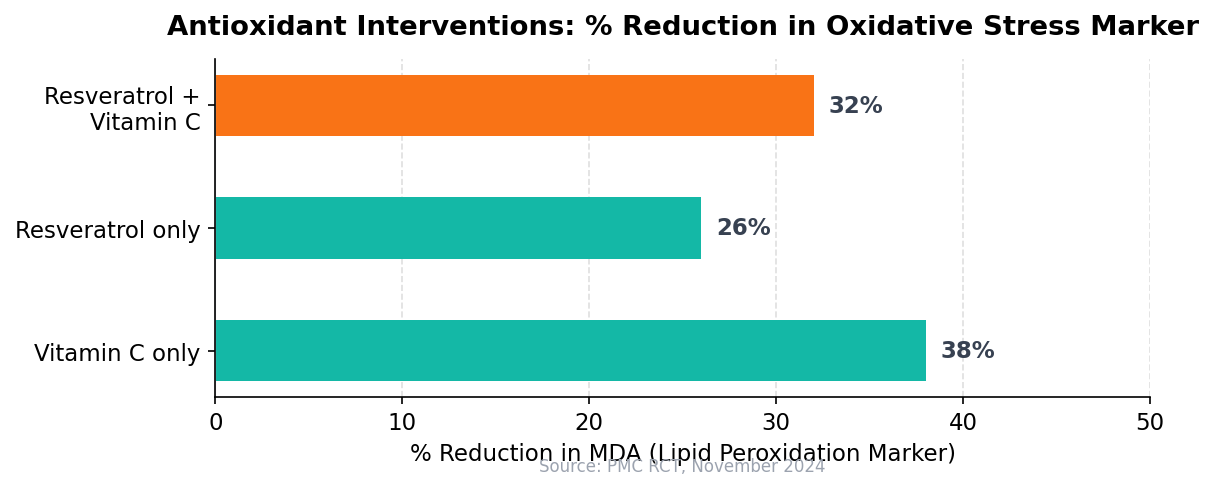
A 2024 clinical trial found that combining vitamin C with resveratrol cut MDA (a key marker of cell damage) by 32%. It also raised total antioxidant capacity by 30% in three months (PMC RCT, 2024).
Why liposomal? Standard vitamin C isn’t absorbed well at higher doses. Liposomal vitamin C uses a fat-based coating to get more of it into your cells. The difference in absorption is significant.
A separate review of 6 trials (533 people) also found resveratrol alone meaningfully raised two key antioxidant enzymes — catalase and glutathione peroxidase (PMC, 2025). The combination works better than either alone.
Goldman Labs liposomal antioxidants use phospholipid encapsulation to boost absorption. For a full stack including CoQ10 and glutathione, the Goldman Laboratories antioxidant range covers the key compounds. You can also browse the cellular health supplements category for a structured approach.
Chaga Mushroom
Chaga (Inonotus obliquus) is one of the most studied mushrooms for antioxidant support. A 2026 study found chaga extract reduced a key immune stress marker by 26% and restored antioxidant enzyme activity (PMC, 2026). Note: this is animal-based data. Human trials are still needed.
Chaga’s active compounds include melanin, polyphenols, and beta-glucans. These target both free radical damage and inflammation at the same time. If you want a concentrated form, a Chaga mushroom antioxidant supplement in tincture form delivers the active compounds directly.
Red Light Therapy
Red and near-infrared light (660–850 nm) has a two-part effect on oxidative stress. It creates 7 times fewer free radicals than blue or green light. And it turns up your own antioxidant enzymes — SOD, catalase, and glutathione peroxidase (Frontiers in Photonics, 2024).
This is different from taking a supplement. It doesn’t add antioxidants from outside. It makes your body produce more of its own. That’s a more sustainable approach.
Red light therapy for cellular health works through your mitochondria. It improves how efficiently they make energy — which directly reduces the amount of free radicals produced as a by-product.
From our experience: At Holosophy, clients who combine red light sessions with a daily antioxidant supplement typically report better skin quality and more consistent energy within 6–8 weeks. It lines up with what the research predicts — better mitochondrial efficiency means fewer free radicals produced in the first place.
Hydrogen Water
Molecular hydrogen (H₂) works differently from most antioxidants. It only targets the most harmful free radicals. It leaves the useful ones alone.
Why does that matter? Some free radicals are helpful. They push your body to adapt after exercise. Indiscriminate antioxidants can block that adaptation. Hydrogen water doesn’t have that problem.
For daily antioxidant support without interfering with healthy signals, hydrogen water for antioxidant support is a practical and evidence-informed option.
Frequently Asked Questions About Oxidative Stress
What causes oxidative stress to increase?
The main causes are UV rays, air pollution, cigarette smoke, poor sleep, and long-term stress. Too much alcohol helps too. So does hard exercise without enough recovery. Each one either ramps up free radical production or weakens your antioxidant defences. Your mitochondria are the main source of free radicals — so anything that stresses your energy systems raises your oxidative load.
Can you reverse oxidative stress damage?
Partly, yes. Your body can repair oxidative damage when given the right tools. A 2024 clinical trial showed a 32% drop in a key damage marker in just three months (PMC, 2024). The best results come when you also cut the stressors causing the damage — not just add supplements.
What foods fight oxidative stress?
Wild blueberries, dark leafy greens, green tea, extra virgin olive oil, dark chocolate (70%+), and broccoli family vegetables. These foods contain polyphenols, vitamin C, vitamin E, and sulforaphane. They both cancel out free radicals and help your body make more antioxidant enzymes. The more colour variety in your vegetables, the better.
Is oxidative stress the same as inflammation?
No — but they feed each other. Oxidative stress is the imbalance between free radicals and your defences at the cell level. Inflammation is a broader immune response involving your immune cells and signalling proteins. Oxidative stress triggers inflammation. Inflammation in turn creates more free radicals. You need to address both to get results.
How long does it take antioxidants to make a difference?
The 2024 trial showing a 32% improvement ran for three months (PMC, 2024). Some people notice changes in 4–6 weeks. The timeline depends on how much damage you started with, how well your supplements are absorbed, and whether you’ve reduced the things causing the damage. Liposomal forms tend to work faster because absorption is much higher.
The Bottom Line
- Oxidative stress is the root cause of most visible and functional aging — from skin changes to brain health. It starts with free radicals outrunning your antioxidant defences.
- The damage is real and measurable. Key markers like MDA drop significantly with targeted action — liposomal vitamin C, red light therapy, and hydrogen water all have evidence behind them.
- Your mitochondria are the key leverage point. CoQ10 decline, DNA damage, and poor cell cleanup all converge there. Mitochondria-focused strategies give you the highest return.
If you want a structured plan rather than guessing which supplements to stack, Holosophy’s anti-aging and longevity protocol sequences the evidence-based interventions into a programme built around your biology — not generic advice.
Medical disclaimer: This article is for educational purposes only and does not constitute medical advice. Consult a qualified healthcare professional before starting any new supplement or therapeutic protocol, particularly if you have an existing health condition.