


Sympathetic vs. Parasympathetic: How Stress Works

Your heart races before a big presentation. Your palms sweat during a difficult conversation. Then minutes later, calm washes over you. This is your autonomic nervous system at work.
The sympathetic and parasympathetic nervous systems work like opposing partners. When one activates, the other quiets down. They control your heartbeat, digestion, and stress response automatically.
Most people live stuck in sympathetic overdrive. This constant stress creates health problems. But you can learn to shift between these states deliberately. This guide shows you how.
TLDR
The sympathetic nervous system triggers your fight or flight response during stress. It speeds your heart and prepares you for action. The parasympathetic nervous system activates rest and digest mode. It helps your body recover and heal. Both are divisions of the autonomic nervous system working in balance.
Modern life keeps most people in constant fight or flight. This disrupts the natural balance and causes health issues. You can restore balance through breathing techniques, vagus nerve stimulation, lifestyle changes, and modern tools. Learning to activate your parasympathetic response is key to managing stress and improving overall health.
Table of Contents
- The Autonomic Nervous System: Your Body’s Autopilot
- Sympathetic Nervous System: The Gas Pedal
- Parasympathetic Nervous System: The Brake
- Sympathetic vs Parasympathetic: Key Differences
- How Fight or Flight and Rest and Digest Work Together
- The Vagus Nerve: Your Parasympathetic Highway
- Signs Your System Is Out of Balance
- How to Balance Your Nervous System
- Modern Tools and Technology
- Frequently Asked Questions
- Conclusion
The Autonomic Nervous System: Your Body’s Autopilot
You breathe without thinking. Your heart beats automatically. Your food digests while you sleep. The autonomic nervous system handles these functions without conscious control. It’s your body’s autopilot.
This system has three main parts: the sympathetic nervous system, parasympathetic nervous system, and enteric nervous system. The first two work in opposition through reciprocal inhibition. When one activates, it suppresses the other.
Think of them as a sliding scale rather than an on-off switch. Your body constantly adjusts based on internal and external demands. Heart rate variability measures this balance by tracking time between heartbeats. Higher variability indicates better health and adaptability.
The enteric nervous system controls your gut and communicates with both other systems. This explains why stress affects digestion and gut health influences mood.
Sympathetic Nervous System: The Gas Pedal
When danger appears, your sympathetic nervous system launches into action. Signals shoot from your spinal cord throughout your body in milliseconds, creating the fight or flight response.
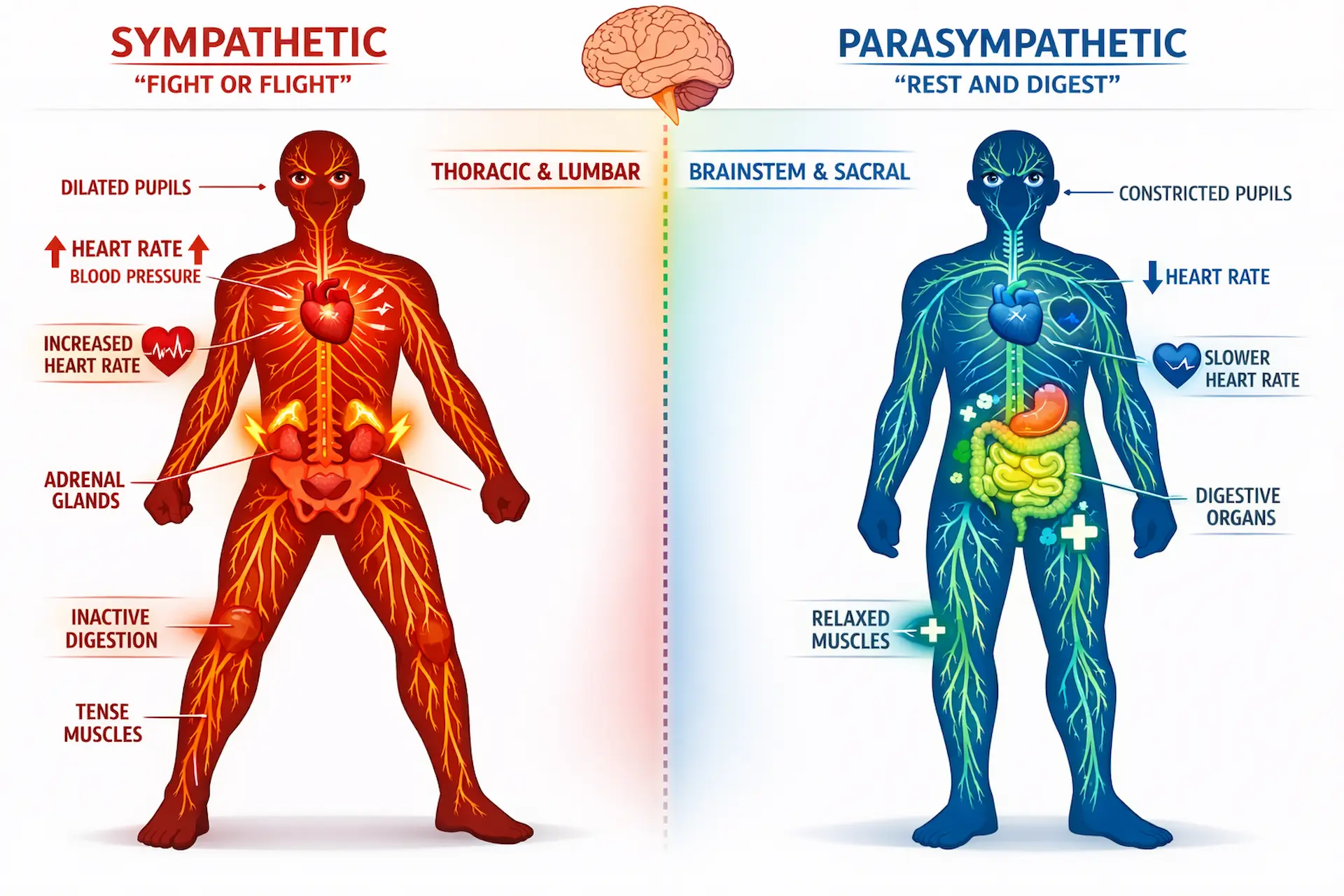
Your pupils dilate for better vision. Your heart pounds faster. Blood rushes to your muscles and brain. Your liver releases glucose for energy. Your adrenal glands release adrenaline. Digestion stops.
This system evolved for short-term survival like outrunning predators. The problem? Your sympathetic nervous system can’t distinguish between a lion and a difficult email. Modern stressors like work deadlines, financial worries, and social media all trigger this ancient survival response.
Chronic activation creates serious problems. Elevated blood pressure damages vessels. Stress hormones suppress immunity and impair memory. Reduced digestion leads to nutrient malabsorption. The system designed to save you becomes harmful when constantly active.
Parasympathetic Nervous System: The Brake
The parasympathetic nervous system handles recovery, repair, and restoration. This is your rest and digest mode. It originates from your brainstem (especially the vagus nerve) and sacral spinal nerves.
The vagus nerve carries about 75% of parasympathetic signals. When active, your heart rate slows. Blood flows to digestive organs. Digestive enzymes release. Your immune system operates optimally. Growth and repair processes accelerate.
This system enables essential processes that only occur when you feel safe. Deep sleep, tissue repair, immune function, memory consolidation, and emotional processing all require parasympathetic predominance. Without it, your body can’t heal properly.
The sympathetic and parasympathetic effects on heart rate reveal elegant balance. Sympathetic activation releases norepinephrine to speed the heart. Parasympathetic activation releases acetylcholine to slow it. This constant negotiation produces healthy heart rhythm variation.
Sympathetic vs Parasympathetic: Key Differences
Understanding the difference between sympathetic and parasympathetic nervous system helps you take control of your stress response. While both belong to the autonomic nervous system, they operate through distinct pathways and create opposing effects.
| Feature | Sympathetic | Parasympathetic |
| Common Name | Fight or Flight | Rest and Digest |
| Origin | Thoracic and lumbar spine | Brain and sacral spine |
| Main Neurotransmitter | Norepinephrine | Acetylcholine |
| Heart Rate | Increases | Decreases |
| Digestion | Slows or stops | Activates and improves |
| Pupils | Dilate | Constrict |
| Energy Use | Breaks down stores (catabolic) | Builds up stores (anabolic) |
| Response Spread | Whole body | Specific organs |
The sympathetic system spreads signals widely. One nerve can activate many areas, creating a coordinated whole-body response. The parasympathetic system targets specific organs with more localized effects. This allows precise control over individual functions.
Sympathetic activity is catabolic, breaking down fuel for immediate use. Parasympathetic activity is anabolic, building energy stores and repairing tissue. Understanding these sympathetic vs parasympathetic neurotransmitters and their effects shows why you can’t simply turn off stress. But you can learn to activate the opposite system deliberately.
How Fight or Flight and Rest and Digest Work Together
These systems aren’t enemies. They’re partners maintaining balance. You shift between them dozens of times daily. Checking your phone triggers mild sympathetic activation. Eating lunch activates parasympathetic responses. Exercise demands sympathetic dominance. Sleep requires parasympathetic control.
This constant shifting represents normal, healthy function. The key is appropriate response to current demands. Vagal tone measures your parasympathetic baseline. Higher tone means better emotional regulation, faster stress recovery, and improved heart health.
Heart rate variability shows how these systems collaborate. Inhaling increases sympathetic activity slightly, speeding your heart. Exhaling raises parasympathetic activity, slowing it. This variation indicates healthy flexibility. Chronic stress reduces variation, creating rigidity.
The most resilient people aren’t those who never stress. They’re those who recover quickly by shifting efficiently from sympathetic to parasympathetic. Learning to regulate your nervous system makes this shift possible.
The Vagus Nerve: Your Parasympathetic Highway
The vagus nerve is your primary parasympathetic pathway. This wandering nerve extends from your brainstem through your neck, chest, and abdomen, connecting to your heart, lungs, and digestive tract.
About 80% of vagus nerve fibers carry signals from body to brain. Your vagus nerve constantly informs your brain about heart rhythm, breathing, digestion, and inflammation. This upward information flow significantly influences your emotions and thinking.
The role of the vagus nerve extends beyond basic regulation. Research links vagal activity to social engagement, emotional control, and compassion. Good vagal function helps you read social cues and regulate emotions. Poor function correlates with anxiety, depression, and inflammation.
You can activate your vagus nerve naturally. Cold water on your face triggers vagal pathways. Slow, deep breathing with extended exhales stimulates vagal fibers. Humming, singing, and gargling activate the nerve through vibration. Social connection and safety feelings enhance function. These are direct interventions that send calm signals your body trusts.
Signs Your System Is Out of Balance
Autonomic dysfunction manifests in diverse ways. Recognizing symptoms of autonomic dysfunction early allows intervention before problems worsen.
Cardiovascular symptoms often appear first. Persistently elevated heart rate, dizziness upon standing, palpitations, or chest tightness may reflect imbalance. Digestive disturbances signal dysfunction too. Chronic sympathetic dominance impairs digestion, causing constipation, diarrhea, bloating, poor appetite, or heartburn.
Temperature problems like feeling too hot or cold, inappropriate sweating, or inability to sweat point to autonomic issues. Sleep disturbances virtually always involve imbalance. Sympathetic overactivity creates racing thoughts, sleep difficulty, and unrefreshing rest. Many benefit from a better sleep protocol addressing nervous system balance.
Psychological symptoms including anxiety, panic, concentration problems, emotional instability, and feeling “wired but tired” often stem from autonomic dysfunction. Chronic pain conditions like fibromyalgia show strong associations with imbalance. Sympathetic overactivity increases pain sensitivity.
How to Balance Your Nervous System
Restoring balance requires multiple approaches. The goal is developing flexibility by activating appropriately and recovering efficiently.
Breathing techniques offer the most accessible intervention. Your breath bridges conscious and unconscious processes. Slow, deep breathing with extended exhales directly stimulates the vagus nerve. The physiological sigh (two short inhales, one long exhale) rapidly shifts toward parasympathetic dominance. Breathing at 5-6 breaths per minute optimizes heart rate variability.
Cold exposure activates the vagus nerve through the dive reflex. Start with cold water on your face or 30 seconds of cold at shower’s end. Brief exposure works best.
Movement and exercise temporarily increase sympathetic activity but enhance parasympathetic recovery. Include gentle practices like yoga. Avoid intense exercise near bedtime. Focus on consistency.
Sleep hygiene directly impacts balance. Consistent sleep times strengthen circadian rhythms. Create day-night transitions through light, temperature, and routine.
Nutrition influences function significantly. Stable blood glucose through balanced meals creates balance foundation. Magnesium, omega-3s, and B vitamins support nervous system function. Gut health affects autonomic function.
Social connection activates parasympathetic pathways. Meaningful relationships enhance vagal tone. Mindfulness and meditation measurably shift balance by reducing threat-scanning. For structured approaches, explore these nervous system reset techniques.
Modern Tools and Technology
Technology creates challenges while offering solutions. Screen time stimulates sympathetic activation through blue light and engagement. Social media creates constant low-grade stress. Connectivity means threats reach you anywhere.
Yet technology provides tools for regulation. Wearables track heart rate variability with real-time feedback. Biofeedback apps teach you to influence processes you couldn’t access before. Guided breathwork apps provide precision timing.
Holosophy bridges ancient wisdom with modern neuroscience. Their stress and anxiety reduction protocol integrates evidence-based approaches into a cohesive system.
Vagus nerve stimulation devices offer non-invasive alternatives to medical VNS. The Pulsetto device uses gentle electrical stimulation to activate vagal pathways, enhancing parasympathetic tone without medication.
The Apollo Neuro wearable uses gentle vibrations to signal safety. It creates conditions for natural parasympathetic activation. Users report improved sleep, reduced anxiety, and better stress recovery.
Use these tools strategically, not dependently. Technology works best as a catalyst for developing awareness and control. The goal is learning to recognize and influence your autonomic state through various methods.
Frequently Asked Questions
What happens when both systems activate at once?
Both can activate simultaneously, though one usually dominates. Sexual arousal involves both systems. Some digestive processes need both too. However, strong activation of both without clear purpose (called autonomic conflict) creates uncomfortable sensations like nausea, dizziness, or anxiety. This happens during panic attacks when your body receives mixed safety and threat signals.
Can you strengthen your parasympathetic nervous system?
Yes. The parasympathetic system responds to training like muscles respond to exercise. Regular practices including meditation, breathwork, cold exposure, and vagus nerve stimulation measurably increase vagal tone. Research shows heart rate variability improves with consistent practice. Daily brief practices work better than occasional long sessions.
How long does it take to restore autonomic balance?
The timeline varies based on imbalance duration and intervention consistency. Acute stress-induced imbalance might resolve in days or weeks. Chronic dysfunction developed over years typically requires months of consistent work. However, most people notice initial improvements in sleep, anxiety, and energy within 2-4 weeks of implementing autonomic support practices.
Does exercise help or hurt autonomic balance?
Exercise increases sympathetic activity during workouts but enhances parasympathetic recovery long-term. Moderate aerobic exercise typically improves balance. Overtraining creates chronic sympathetic dominance. Exercising near bedtime interferes with sleep. The sweet spot involves regular, moderate exercise earlier in the day with adequate recovery.
Are there supplements that support autonomic balance?
Several supplements show evidence for supporting function. Magnesium supports parasympathetic activity. Omega-3s improve vagal tone and reduce inflammation. Ashwagandha helps modulate stress responses. B-vitamins support neurotransmitter production. L-theanine promotes parasympathetic activation without sedation. Supplements work best as part of comprehensive approaches. Quality matters and individual responses vary.
Conclusion
The interplay between your sympathetic and parasympathetic nervous systems shapes your health. From sleep quality to healing ability, these systems create the foundation of your daily experience.
Modern life tips most people toward sympathetic dominance. Chronic activation of acute threat systems creates health consequences. Yet this knowledge empowers you. Understanding these systems means you can influence them.
Small, consistent practices that activate your parasympathetic nervous system accumulate over time, restoring natural balance. Whether through breathwork, cold exposure, movement, sleep optimization, or innovative tools from companies like Holosophy, you have more control than you might imagine.
Your nervous system evolved over millions of years to help you survive and thrive. By working with these systems, by learning when to activate and when to rest, you align with your biology’s deepest wisdom. The difference between sympathetic and parasympathetic function is the key to unlocking your body’s innate capacity for healing, growth, and resilience.