

How to Regulate Your Nervous System: Practical Techniques

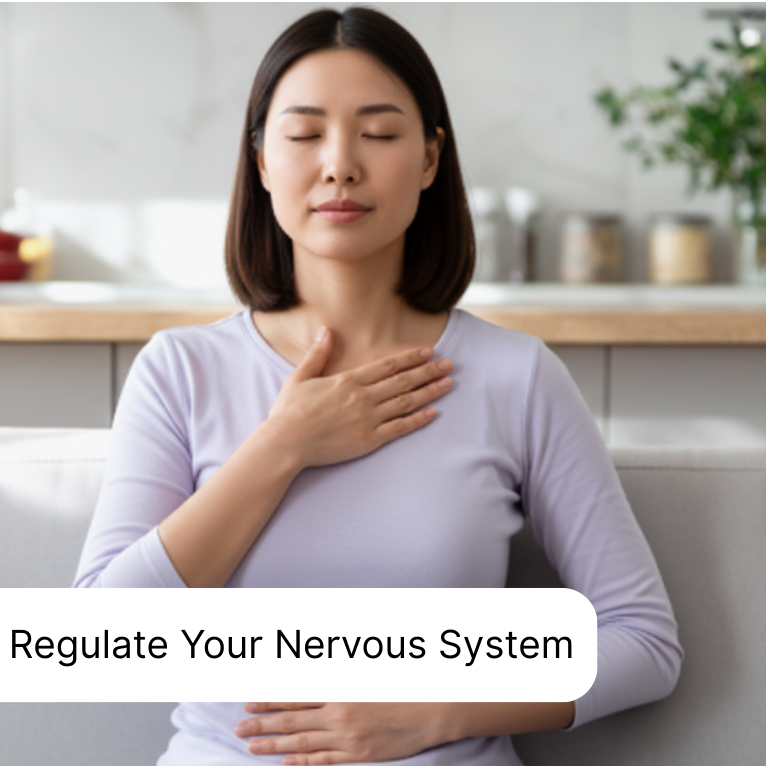
Nervous-system regulation is the practice of consciously shifting between sympathetic (fight-or-flight) and parasympathetic (rest-and-digest) states using breath, vagal tone, cold exposure and sensory inputs. Most people in chronic stress live in low-grade sympathetic dominance — regulation restores the baseline.
TL;DR
You can shift out of fight-or-flight in 60–90 seconds with a single physiological sigh or a 4-7-8 breath cycle. Sustained change requires 6–8 weeks of daily vagal-toning practice. Fastest reliable methods, ranked: physiological sigh > cold-water face dip > humming > 4-7-8 breathing > slow exhale walks.
Racing thoughts, irritability, sleep problems, digestive issues, or a constant feeling of being “on edge” all point to the same underlying mechanism: a nervous system stuck in defensive activation. At the centre of these symptoms is one key factor: your nervous system.
Understanding how to regulate your nervous system can transform your mental and physical well-being. It helps you recover from stress faster, improve emotional resilience, and create a sense of safety in your body. Whether you’re dealing with chronic stress, burnout, anxiety, or simply want to feel calmer, this guide offers clear, practical, and science-backed nervous system regulation techniques you can start using today.
What Is the Nervous System and Why Does It Need Regulation?
Your nervous system is your body’s communication network. It constantly monitors your environment and decides whether you are safe, stressed, or in danger. It has two main branches:
1. Sympathetic Nervous System (SNS)
Often called the “fight-or-flight” system, it activates stress responses—such as a faster heartbeat, tense muscles, shallow breathing, and heightened alertness.
2. Parasympathetic Nervous System (PNS)
Known as the “rest-and-digest” system, this system helps you feel calm, sleep well, digest food, and think clearly.
When you experience stress—whether emotional, physical, or mental—your sympathetic system becomes activated. Typically, once the stress passes, the parasympathetic system should restore balance to your body.
But modern life is different. Many people stay in prolonged sympathetic activation, leading to:
- Chronic fatigue
- Anxiety
- Muscle tension
- Digestive issues
- Emotional overwhelm
- Sleep disturbances
- Burnout
This is why learning how to regulate the nervous system is essential. Regulation refers to intentionally guiding your body back into a state of safety and balance.
Signs Your Nervous System Is Dysregulated
Nervous system dysregulation can show up differently from person to person, but common symptoms include:
Emotional Signs
- Irritability or mood swings
- Feeling overwhelmed easily
- Anxiety or constant worry
- Emotional numbness
Physical Signs
- Tight chest or throat
- Headaches
- Digestive problems
- Rapid heartbeat
- Chronic pain
Behavioural Signs
- Difficulty concentrating
- Trouble sleeping
- Social withdrawal
- Emotional eating
- Overworking or burnout patterns
If you recognise several of these, your system may be stuck in stress mode.
The Science Behind Nervous System Regulation
The key to regulating your nervous system lies in the vagus nerve—the longest nerve in your body that connects the brain to the heart, lungs, gut, and other organs. When activated, it signals your body to slow down, breathe deeper, digest better, and relax.
This process, known as increasing your vagal tone, is directly related to stress recovery and emotional stability.
Stimulating this nerve through simple exercises can shift you from stress to calm in as little as a few minutes.
Nervous System Regulation Techniques You Can Use Daily
These evidence-based techniques help activate the parasympathetic nervous system, reduce stress, and restore balance.
1. Breathwork (The Fastest Way to Reset Stress)
Breathing is the most accessible and effective tool for regulating your nervous system. Slow, intentional breathwork directly activates the vagus nerve.
- Physiological Sigh (2–3 breaths)
A powerful, science-backed technique for rapidly reducing stress.
How to do it:
- Inhale through your nose.
- Take a second short inhale on top of the first.
- Exhale slowly through your mouth.
Repeat 2–5 times.
Why it works:
It releases trapped air in the lungs, instantly reducing anxiety.
- 4-7-8 Breathing
Ideal before sleep or during moments of overwhelm.
- Inhale for 4 seconds
- Hold for 7 seconds
- Exhale for 8 seconds
This lowers heart rate and triggers relaxation.
- Box Breathing
Used by athletes, pilots, and military professionals.
- Inhale 4 seconds
- Hold 4 seconds
- Exhale 4 seconds
- Hold 4 seconds
Great for regaining clarity and grounding.
2. Somatic Techniques (Release Stress Stored in the Body)
When the body feels unsafe, stress can get “stuck”, creating physical tension. Somatic exercises help release this.
- Body Shaking (Somatic Release)
Shake your arms, legs, and torso for 30–60 seconds.
This helps discharge stress hormones and reduce physical tension.
- The Butterfly Hug
Cross your arms over your chest and tap alternately on each shoulder.
This creates a calming bilateral stimulation effect used in trauma-informed therapy.
- Side-to-Side Eye Movements
Look slowly left to right 10–15 times.
This signals to your brain that you are safe in your environment.
3. Grounding Techniques (Bring Your Mind Back to the Present)
Grounding is especially helpful for anxiety, emotional flooding, or racing thoughts.
- The 5-4-3-2-1 Method
Identify:
5 things you can see
4 things you can touch
3 things you can hear
2 things you can smell
1 thing you can taste
This technique restores awareness and reduces panic.
- Barefoot Grounding
Walk barefoot on grass or sand for 2–3 minutes.
This activates sensory nerves that promote relaxation.
4. Cold Exposure (Instant Vagus Nerve Activation)
Cold stimulates the vagus nerve and reduces inflammation.
Easy, safe methods:
- Cold splash to the face
- Ice roller along the jawline and neck
- 30-second cold shower at the end of bathing
Cold exposure helps:
- Reduce anxiety
- Improve mood
- Boost stress tolerance
5. Vagus Nerve Stimulation Exercises
These are simple but powerful.
- Humming
- Gargling
- Slow singing
- Gentle neck stretching
- Deep belly breathing
These movements create vibrations that directly stimulate the vagus nerve.
6. Mind–Body Lifestyle Habits for Long-Term Regulation
To maintain balance, long-term habits are essential.
- Proper Sleep Hygiene
Poor sleep triggers sympathetic activation. Establish a consistent sleep schedule, reduce screen time, and create a night calming routine.
- Anti-Inflammatory Nutrition
Your gut and nervous system are deeply connected.
Foods that support regulation:
- Omega-3-rich foods
- Fermented foods
- Leafy greens
- Berries
- Magnesium-rich foods (almonds, spinach, dark chocolate)
- Gentle Daily Movement
Walking, stretching, yoga, and mobility exercises improve vagal tone and reduce stress hormones.
- Limiting Caffeine and Sugar
These can overstimulate the nervous system and worsen anxiety.
What Causes Nervous System Dysregulation?
Understanding the root causes helps you prevent future stress overload.
Common triggers include:
- Chronic stress at work or home
- Lack of sleep
- Poor diet
- Emotional suppression
- Trauma or past negative experiences
- Overworking and burnout
- High caffeine intake
- Social isolation
- Extended screen time
Your nervous system becomes overwhelmed when it doesn’t have enough time to rest and recover.
Nervous System Regulation Techniques Compared
The fastest reliable methods, ranked by time-to-effect and ease of use. Times are typical for someone in low-grade sympathetic activation, not acute panic.
| Technique | Time to first effect | Difficulty | Best for |
|---|---|---|---|
| Physiological sigh | 30 seconds | Very easy | Acute spikes, public settings |
| Cold-water face dip | 60 seconds | Easy (water + bowl) | Panic, rumination, racing heart |
| 4-7-8 breath cycle | 60–90 seconds | Easy | Sleep onset, evening wind-down |
| Humming / chanting | 2 minutes | Easy (private) | Vagal tone, anxiety |
| Slow-exhale walking | 5 minutes | Easy | Rumination, low-grade stress |
| Box breathing (4-4-4-4) | 3 minutes | Easy | Focus, pre-meeting |
| Cold shower (60-90s end) | During exposure | Moderate | Energy, mood, vagal training |
| HRV biofeedback | 2–4 weeks | Needs device | Long-term vagal-tone training |
Source attribution: physiological-sigh time-to-effect is reported in Balban et al. (2023) — see the Sources section below. Cold-face dive reflex magnitudes come from Porges’ polyvagal work.
How Long Does Nervous-System Regulation Take?
Two timelines run in parallel. The acute shift out of fight-or-flight happens in seconds. The baseline rebuild — making parasympathetic dominance your default — takes weeks to months.
Week-by-week: what to expect from daily practice
- Days 1–3: Notice the acute shift. You can lower heart rate on demand. You feel a difference within practice sessions, but it doesn’t last yet.
- Days 4–10: Sleep onset gets faster (typically 5–15 minutes sooner). Morning anxiety drops in the first 20 minutes after waking.
- Weeks 2–3: Inter-session benefits start sticking. Reactivity to small stressors (emails, traffic) reduces noticeably. HRV (if you track it) starts trending up.
- Weeks 4–6: Sleep quality, mood and energy compound. Resting heart rate often drops 3–8 bpm. You stop needing to “remember” to regulate — it becomes automatic in familiar contexts.
- Weeks 8–12: New baseline. You feel like a different person at rest. Stress events still happen but recovery is faster (often by 50–70%).
- Beyond 12 weeks: Resilience. Your nervous system handles novel stressors without rebounding into chronic activation.
If your dysregulation comes from a single recent event (job loss, breakup, accident), expect the faster end of these timelines. If it’s from years of chronic stress, trauma, or shift work, expect the slower end and consider working with a clinician alongside daily practice.
When to Seek Help
If you experience persistent symptoms such as extreme fatigue, panic attacks, trauma responses, or loss of daily function, consider speaking with a mental health or medical professional. Nervous system regulation is powerful, but some situations require guided support.
For ambient nervous-system support that works while you go about your day, the Apollo Neuro touch-therapy wearable is a useful addition to the daily practice above.
Frequently Asked Questions
What is the fastest way to regulate the nervous system?
A single physiological sigh. Two short inhales through the nose followed by one long exhale through the mouth. Heart rate drops within 30 seconds. For an even faster effect when you’re in acute panic, splash cold water on your face above the cheekbones to trigger the mammalian dive reflex via the trigeminal nerve.
How long does it take to regulate a chronically dysregulated nervous system?
Acute reset out of fight-or-flight: 60–90 seconds with the right technique. Daily baseline change (you feel calmer most of the time): 2–4 weeks of consistent practice. Chronic dysregulation from years of stress, trauma, or shift work: typically 8–12 weeks of daily practice, often longer if combined with clinical support.
Can I regulate my nervous system without breathwork?
Yes. Cold exposure (face dip, cold shower, ice plunge), humming or chanting, slow-exhale walking, and HRV biofeedback all regulate via the vagus nerve without breath-focused work. People who find breathwork triggers anxiety (this is real, especially after trauma) often respond better to cold or to slow movement practices first.
Why does my nervous system feel worse when I start practising?
If you spent years in sympathetic dominance, your baseline felt “normal” because it was familiar. As parasympathetic capacity grows, you start feeling the dysregulation you were numbing. This is temporary — usually 3–10 days. Slow down the practice, don’t stop. If symptoms persist or worsen, consult a clinician trained in nervous-system work.
Do I need a wearable device like Apollo Neuro or Pulsetto?
No. The fastest-acting techniques need nothing except your body and 60 seconds. Devices amplify and remind — they don’t replace practice. Most people regulate fine without one. If you’re paying attention but struggling to remember to practice, or want passive support during meetings, a wearable helps. Compare options in our Apollo Neuro vs Pulsetto guide.
Is nervous-system regulation the same as meditation?
No. Meditation is one path — it trains attention and (in some traditions) shifts vagal tone. Nervous-system regulation is broader: it includes breath, cold, movement, sound, and sensory practices that work even when sitting still feels impossible. Many people who can’t meditate (yet) can regulate.
How do I know if my nervous system is regulated or dysregulated?
Signs of regulation: sleep onset under 20 minutes, deep breath capacity (you can sigh fully), digestion runs smoothly, emotional reactions match the situation, energy is steady. Signs of dysregulation: tight chest, shallow breathing, racing thoughts, irritability, gut issues, exhaustion despite rest. The full checklist is in our 10 signs guide.
Can children or teenagers do these techniques?
Most yes, with adjustments. Physiological sighs, humming, slow walks, and gentle cold exposure (cool water on hands or face) work for ages 6+. Avoid intense cold plunges and breath-holding practices for children. For teenagers with anxiety, supervised box breathing and slow walks are evidence-supported. Consult a paediatrician if your child has a diagnosed condition.
Sources
- Porges, S. W. (2007). The polyvagal perspective. Biological Psychology, 74(2), 116–143. PubMed
- Balban, M. Y., Neri, E., Kogon, M. M., Weed, L., Nouriani, B., Jo, B., Holl, G., Zeitzer, J. M., Spiegel, D., & Huberman, A. D. (2023). Brief structured respiration practices enhance mood and reduce physiological arousal. Cell Reports Medicine, 4(1), 100895. PubMed
- Russo, M. A., Santarelli, D. M., & O’Rourke, D. (2017). The physiological effects of slow breathing in the healthy human. Breathe, 13(4), 298–309. PubMed
Building a Daily Nervous System Regulation Routine
Learning how to regulate your nervous system is one of the most valuable skills you can develop. By practising these nervous system regulation techniques, you can reduce anxiety, improve emotional stability, and build long-term resilience.
Start with small steps—1 to 2 techniques a day—and gradually build a routine that feels natural to you. Over time, you’ll notice better sleep, clearer thinking, calmer reactions, and a stronger sense of control.
The more you support your nervous system, the more it will support you.