


How to Reduce Stress in Just 4 Minutes Quick Reset

Stress has become an almost unavoidable part of modern life. Between demanding work schedules, family responsibilities, and the constant stream of information from technology, it’s easy to feel overwhelmed. While long-term strategies like regular exercise, therapy, or mindfulness courses are essential for overall mental health, sometimes you just need to reduce stress fast — right in the middle of your day.
The good news is that research shows it’s possible to reset your nervous system in as little as four minutes. These quick, science-backed techniques target the body’s stress response, activating the calming, parasympathetic nervous system and leaving you feeling calmer, clearer, and more balanced.
In this guide, we’ll explore the mechanisms of stress, why short interventions can be so effective, and several practical 4-minute techniques you can use anywhere — at your desk, on your commute, or at home.
Understanding Stress and the Nervous System
To effectively reduce stress fast, it helps to understand what happens in your body when stress hits.
When you perceive a threat — whether it’s a looming deadline, a disagreement, or an unexpected problem — your sympathetic nervous system activates the classic “fight-or-flight” response. This releases stress hormones such as adrenaline and cortisol, increasing heart rate, blood pressure, and alertness. While these changes were essential for our ancestors’ survival, chronic activation in modern life can lead to fatigue, anxiety, poor sleep, digestive issues, and even inflammation.
The parasympathetic nervous system, on the other hand, is your body’s built-in calming mechanism. It lowers heart rate, relaxes muscles, aids digestion, and restores balance. The key to reducing stress fast is learning how to switch your nervous system from fight-or-flight to rest-and-digest in minutes — rather than waiting for hours of downtime.
Signs You Need a Quick Stress Reset
Before diving into techniques, it’s important to recognise when your nervous system is overloaded. Common signs include:
- Rapid or shallow breathing
- Tension in the neck, shoulders, or jaw
- Racing thoughts or mental fog
- Irritability or frustration
- Digestive discomfort
- Low energy or difficulty concentrating
If you notice these symptoms, even briefly practising a 4-minute reset can help you regain control and prevent stress from escalating.
Quick 4-Minute Stress Reduction Techniques
These methods are designed to be simple, effective, and evidence-based, so you can use them anytime you feel your stress levels rising.
1. Deep Breathing Exercises
Breathing is one of the fastest ways to signal safety to your brain. Slow, controlled breaths stimulate the vagus nerve, a key component of the parasympathetic nervous system.
Techniques to try:
- Box Breathing (4-4-4-4 Method): Inhale for 4 seconds, hold for 4 seconds, exhale for 4 seconds, and hold again for 4 seconds. Repeat for 1–2 minutes.
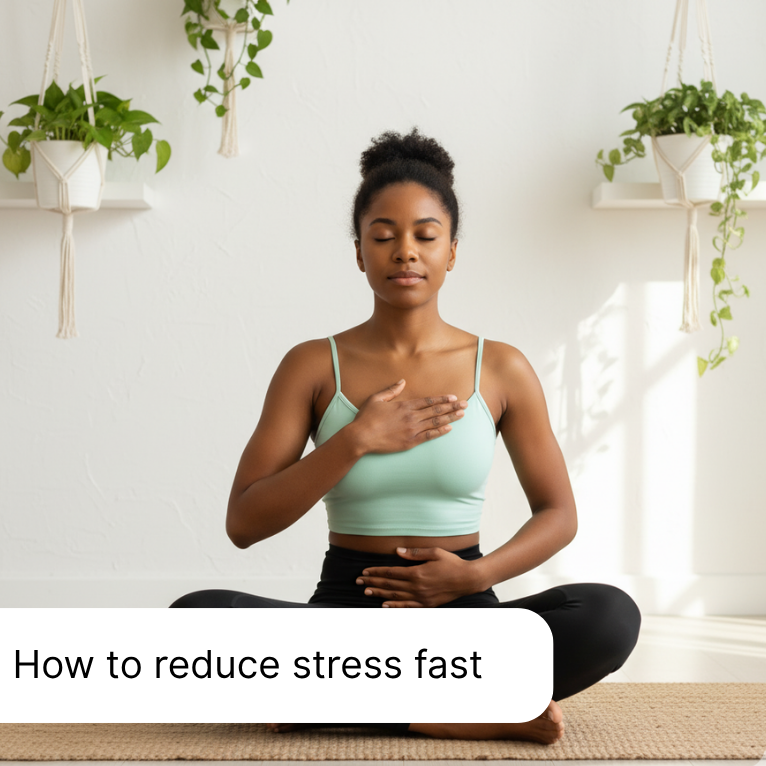
- Diaphragmatic Breathing: Place one hand on your stomach and the other on your chest. Breathe in deeply through your nose, letting your stomach rise. Exhale slowly through your mouth. Focus on the rising and falling of your abdomen.
2. Progressive Muscle Relaxation
This method involves tensing and then relaxing different muscle groups to release physical tension and promote mental calm.
How to do it in 4 minutes:
- Focus on your shoulders and neck. Inhale and tense the muscles for 5 seconds.
- Exhale and release the tension.
- Move down to your arms, fists, and then legs, tensing and releasing each group briefly.
Progressive muscle relaxation is effective because stress often manifests physically, and releasing muscle tightness sends calming signals to the brain, helping reduce anxiety quickly.
3. Cold Water or Face Splash
Exposure to cold water triggers the diving reflex, which activates the parasympathetic nervous system and slows the heart rate.
Simple methods include:
- Splashing your face with cold water for 20–30 seconds
- Running a cold washcloth over your cheeks and neck
- Briefly holding a cold pack to the face
4. Mindfulness or Grounding Exercises
Mindfulness encourages awareness of the present moment, which can stop the cycle of rumination and worry. Even short sessions can be effective.
Quick exercises:
- 5-4-3-2-1 Method: Identify 5 things you can see, 4 things you can touch, 3 things you can hear, 2 things you can smell, and 1 thing you can taste.
- Mini Body Scan: Focus attention sequentially on your feet, legs, torso, arms, and head, noticing sensations without judgement.
Practising mindfulness for just 2–3 minutes can lower stress hormones and improve focus, making it a practical choice when you need a fast reset.
5. Humming or Vocal Stimulation
Vocal vibration stimulates the vagus nerve, which helps shift the body into a parasympathetic state.
- Humming for 30–60 seconds
- Softly chanting or singing
- Even gentle throat vibrations while exhaling
These subtle practices are ideal in office settings or public spaces where you want to reduce stress quietly but effectively.
6. Stretching or Gentle Movement
Physical tension often accompanies mental stress. Quick stretches can release both physical and emotional tension.
Examples:
- Shoulder rolls
- Neck rotations
- Wrist stretches
- Standing and reaching overhead
Even 60–90 seconds of stretching can improve circulation, release endorphins, and lower stress levels, complementing breathing and mindfulness techniques.
Combining Techniques for Maximum Effect
For those seeking maximum impact in 4 minutes, combining two or three techniques can enhance the nervous system reset.
Sample 4-minute micro-routine:
- Minute 1: Diaphragmatic breathing
- Minute 2: Progressive muscle relaxation (neck and shoulders)
- Minute 3: Quick grounding exercise or 5-4-3-2-1 mindfulness
- Minute 4: Humming or gentle stretches
By layering these methods, you target stress from multiple angles — physiological, mental, and emotional — ensuring a rapid and effective reset.
When to Use These Quick Resets
Quick 4-minute stress resets are versatile. They work well:
- During work breaks or before meetings
- After difficult conversations or stressful interactions
- On commutes to or from work
- In the morning, to start your day calmly
- In the evening, to unwind before sleep
Integrating these short practices throughout your day helps reduce the cumulative effect of stress and improves overall resilience.
FAQs About Reducing Stress Fast
Can stress really be reduced in 4 minutes?
Yes. Research shows even brief interventions can trigger parasympathetic activation, lowering heart rate and cortisol levels.
How often should I do a quick stress reset?
Several times a day is ideal. Even 2–3 micro-resets can improve overall stress management.
Are 4-minute techniques as effective as longer sessions?
They provide immediate relief and support long-term resilience when practiced consistently, but longer practices like yoga or meditation are still valuable.
Can these methods improve long-term stress resilience?
Yes. Regularly activating the parasympathetic nervous system trains your body to recover faster from stress.
What’s the best time of day to do a nervous system reset?
Anytime you feel tension or overwhelm. Morning, midday, and evening are all effective opportunities.
Putting Quick Stress Reduction Into Practice
Consistency is key when it comes to reducing stress fast. Incorporating micro-resets into your daily routine trains your nervous system to handle stress more efficiently, improving mood, focus, and overall well-being.
Start with one or two techniques that feel comfortable and gradually experiment with combinations that work best for you. Track how you feel before and after each session to notice improvements. Remember, these 4-minute interventions are not just about immediate relief — they are building blocks for long-term resilience.
Pairing these practices with healthy habits like adequate sleep, balanced nutrition, and regular movement further enhances their effects. Even small, consistent efforts can transform your day, helping you feel calmer, more grounded, and more in control — no matter how hectic life gets.
Bringing It All Together
Learning how to reduce stress fast is about empowering yourself with tools that work in the moment. These 4-minute nervous system reset techniques are easy to practice, scientifically backed, and designed for real-life situations. Whether you’re at work, at home, or on the go, taking a few minutes to breathe, stretch, or ground yourself can make a meaningful difference in how you feel and respond to daily challenges.
With regular practice, these small but powerful habits will not only lower your stress levels but also improve your overall resilience, focus, and wellbeing — helping you navigate life with a calmer mind and a healthier body.