


Fast-track your recovery with PEMF technology. These devices improve circulation and oxygenation at the injury site. This helps accelerate healing in soft tissue and reduces inflammation caused by intense physical training.


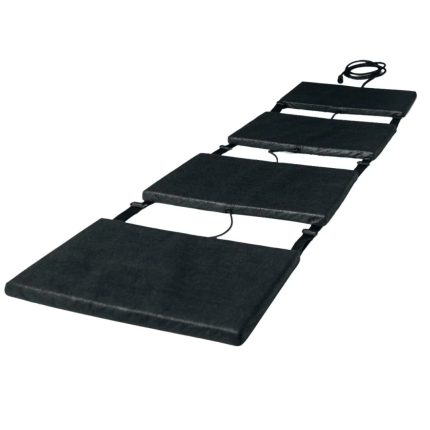
Neurosonic Harmonia


How do PEMF and vibroacoustic therapy accelerate athletic recovery?
Recovery is a bio-energetic process that requires the rapid restoration of homeostasis. PEMF (CELLER8) accelerates this at the mitochondrial level by upregulating ATP production and enhancing cellular respiration.
By increasing nitric oxide bioavailability, PEMF improves microcirculation, which is the primary mechanism for the clearance of metabolic byproducts like lactate and hydrogen ions. Vibroacoustic therapy (Neurosonic) complements this through mechanotransduction, using low-frequency vibrations to stimulate lymphatic drainage and shift the Autonomic Nervous System (ANS) into a parasympathetic recovery state. This dual-action approach reduces the allostatic load on the body, allowing for a faster return to peak performance.
What is DOMS and how do CELLER8 and Neurosonic reduce it?
Delayed Onset Muscle Soreness (DOMS) is the physiological result of micro-trauma to the sarcomeres, triggering an inflammatory cascade involving pro-inflammatory cytokines (such as IL-6 and TNF-α).
CELLER8's PEMF modulates this response by downregulating the prostaglandin E2 signaling that amplifies pain sensitivity. Simultaneously, Neurosonic’s mechanical resonance disrupts the tonal muscle guarding (spasms) that often follows high-intensity eccentric loading. By reducing interstitial edema (swelling) and increasing local perfusion, these technologies significantly shorten the duration of the "soreness window" and prevent the loss of range of motion (ROM) associated with DOMS.
How does Neurosonic compare to foam rolling and massage guns?
While foam rolling and massage guns provide localized mechanical pressure for myofascial release, they are "active" interventions that target specific trigger points.
Neurosonic represents a systemic recovery modality. It provides whole-body vibroacoustic stimulation, reaching every muscle group simultaneously through passive immersion. This is particularly effective for autonomic recalibration—something a massage gun cannot achieve. While a massage gun is excellent for a specific "knot" in the traps, Neurosonic addresses the central nervous system (CNS) fatigue and neuromuscular inhibition that occurs after a full-body training session, making it a more comprehensive tool for global recovery.
When is the best time to use these devices during a training week?
Timing is determined by your circadian biology and the acute inflammatory window.
- Post-Workout (30–60 min): Utilize CELLER8 PEMF on a recovery setting to intervene in the initial oxidative stress phase.
- Pre-Sleep: Deploy Neurosonic to induce a parasympathetic downshift, which is critical for maximizing growth hormone (GH) secretion during deep sleep.
On active recovery days, a morning PEMF session supports collagen synthesis and connective tissue remodeling. This strategic scheduling ensures that your biological repair mechanisms are supported during the specific times they are most active.
Are they suitable for non-athletes recovering from injury or surgery?
Absolutely. Both technologies have a long history in clinical rehabilitation. PEMF is a "gold standard" for osteoblast stimulation and is FDA-cleared for non-union bone fractures.
For post-surgical recovery, Neurosonic is utilized to manage chronic pain signals via the Gate Control Theory, providing a non-pharmacological alternative to traditional analgesics. These devices help reduce post-operative edema and prevent muscle atrophy during periods of forced immobilization, making them invaluable for anyone navigating the pathology-to-wellness spectrum.